
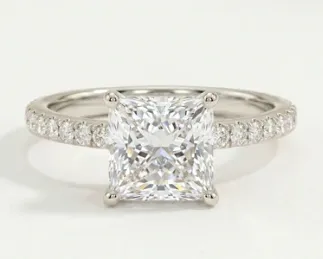
A princess-cut diamond has a distinctive presence. Its clean square outline feels contemporary, while its brilliant faceting creates the lively sparkle traditionally associated with round stones. That combination makes it an appealing choice for engagement rings and fine jewellery, particularly for buyers who want something structured without sacrificing brilliance.
Before selecting a stone, however, it is worth comparing more than carat weight alone. Proportions, setting style and visual balance can all influence how the finished piece looks on the hand. Exploring princess cut diamonds by Lily Arkwright offers a useful starting point for understanding how lab-grown princess-cut stones can vary in character, scale and setting design.
Compare Cut Quality and Proportions
Princess-cut diamonds are known for their sharp corners and geometric symmetry, but two stones of the same carat weight can still look noticeably different. A well-proportioned stone should appear balanced, with even sides and a centred pattern of light across the surface.
Depth is particularly important. If a diamond is cut too deeply, more of its weight may sit beneath the setting, making it appear smaller from above. A shallower stone may offer a larger-looking surface area, although excessive shallowness can reduce brilliance.
It is also worth examining the relationship between length and width. Buyers seeking a classic princess shape will usually prefer a stone that looks distinctly square. Even a small variation can produce a slightly rectangular appearance, which may be desirable for some designs but should be a deliberate choice rather than an unexpected result.
Consider Carat Weight in Context
Carat weight measures mass, not visible size. This distinction matters with princess-cut lab diamonds because their proportions determine how much of the stone can be seen from above.
A two-carat diamond may appeal because it offers greater presence, but size is not the only reason someone may prefer it. A larger centre stone can create stronger visual balance on a broader band, suit a longer finger or provide enough scale for a halo setting without being overshadowed by surrounding diamonds.
By contrast, a one-carat stone may feel more refined and practical for everyday wear. It can sit lower on the hand, pair elegantly with a delicate band and feel less exposed during daily activities. The best choice depends on proportion, lifestyle and personal taste rather than an assumption that larger is automatically better.
Review Colour and Clarity Carefully
Princess cuts can retain colour more visibly than some round brilliant diamonds, especially near the corners. For that reason, colour grade deserves careful consideration when comparing stones intended for white-metal settings.
Clarity is equally relevant because the large table and angular facets may make certain inclusions easier to notice. That said, a flawless grade is not always necessary. An eye-clean diamond, where inclusions are not visible without magnification, can offer excellent visual quality while allowing more of the budget to be directed towards cut, size or setting design.
Lab-grown diamonds are assessed using the same fundamental grading characteristics as mined diamonds. A grading report can therefore help confirm the stone’s specifications and make comparison more objective.
Match the Stone to the Setting
The pointed corners of a princess-cut diamond are one of its defining features, but they are also the areas most vulnerable to impact. A secure setting should protect them effectively.
Four-prong settings create a clean, open appearance and allow plenty of light to enter the stone. V-shaped corner prongs provide additional protection, while bezel and halo settings offer a more enclosed look. A halo can also increase the apparent size of the centre diamond, although it creates a more decorative aesthetic than a simple solitaire.
Band width should be considered alongside the centre stone. A slim band can make the diamond appear larger, while a wider band may create a stronger, more architectural silhouette. Neither approach is inherently superior; the aim is visual harmony.
Final Thought
Choosing a princess-cut lab diamond is ultimately an exercise in balance. Cut quality influences sparkle, proportions affect visible size, and the setting determines both style and security. Rather than focusing on a single specification, compare how each detail contributes to the finished piece.
A thoughtfully chosen princess-cut diamond should feel precise, elegant and personal—distinctive enough to stand apart, yet versatile enough to remain timeless.
