
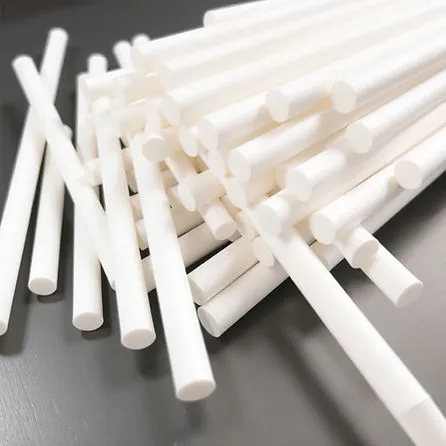
New and modern aerospace systems are increasingly depending on materials that will function reliably in harsh environments. Components should be capable of withstanding high temperatures and mechanical stresses and should be reliable for continuous operation. This is one of the many reasons why an Alumina Rod is the preferred choice for many engineering applications. It has outstanding thermal stability and electrical insulation properties, which proves it to be so useful in applications where traditional materials are unable to perform the same function. The application of an alumina ceramic rod in aerospace helps engineers to make a wise choice of material while developing a product.
Meeting the Demands of Aerospace Engineering
The environment where aircraft, spacecraft and testing equipment are used is where material failure is not allowed. Each component should play an important role in ensuring safety, accuracy and durability, and maintain a stable performance over different temperature ranges.
These environments are ideal for an Alumina Rod since it will provide both high hardness and good wear and corrosion resistance. Unlike many traditional materials, high-temperature-resistant alumina ceramics will not deteriorate in structure after being exposed to high temperatures for a long time.
Ceramic rods carry these exact traits. That is why they fit so well in builds where steady performance and trust are absolute top goals.
Thermal Stability Supports Critical Systems
Changes in temperature are frequently experienced in an aerospace environment. During testing, manufacturing or operation, components may be subjected to rapid changes in temperature. Materials used in such environments should be thermally stable and, at the same time, possess mechanical properties.
However, an alumina ceramic rod for an aerospace application has high operating temperature resistance and is suitable for application. This stability will help to maintain the stability of sensitive systems and support good performance over time.
In the design of thermal processing equipment or insulation systems, it is sometimes as crucial to the engineer as it is to the strength of the product.
Electrical Insulation Adds Another Advantage
There are many electrical components that need reliable insulation in aerospace systems. The excellent dielectric properties of ceramic materials naturally make it possible to isolate electrical circuits, even at high temperatures.
An Alumina Rod is often used in the sensor assembly, electrical support and special fixtures for insulation and mechanical strength. This combination helps to eliminate the need for several materials, and makes component design easier.
Alumina ceramics are useful in a wide variety of engineering projects because of their ability to provide electrical isolation and at the same time structural strength.
Common Aerospace Applications
There are various different configurations of ceramics used in different aerospace projects, but some applications are used on a frequent basis with alumina materials.
Typical uses include:
High-temperature furnace equipment
-
Sensor protection components
-
Electrical insulation supports
-
Precision testing fixtures
-
Laboratory research equipment
-
Thermal processing systems
In many of these environments, an alumina ceramic rod for aerospace applications provides dependable performance while supporting long-term operational reliability.
Factors Engineers Evaluate Before Selection
When choosing ceramic material, more than just picking up a standard size is required. Before deciding on a component, engineers will usually consider the entire working environment.
One of the important factors is the purity of the material – the higher the purity, the better the thermal and chemical stability. When designing, the mechanical loading is also taken into consideration, as well as dimensional tolerances, machining requirements and compatibility with the adjacent materials.
However, sometimes the project may need to be custom manufactured for specific dimensions or tolerances. Close collaboration with qualified ceramic suppliers will help to select the right component for the application.
Supporting Innovation Through Advanced Ceramics
The development of aerospace technology is continuing to increase the complexities of materials used to support systems. Light frames, fine electronics, or tough lab gear all need solid parts. You must have components that hold up well when work conditions get rough.
An Alumina Rod can help in these developments as it provides reliable thermal resistance, excellent wear properties and dimensional stability over the long term. These gains help team leads build gear that runs well every day. They drop constant fix-it jobs later.
Calls for tough ceramics keep growing. Flight teams, in both trade and lab work, need strong parts that hold up.
Conclusion
For teams studying tough ceramic parts for hard science and build tasks, regmetals.com gives useful tips on picking the right alumina rod for flight builds. Learning how a rod acts in a real plane helps you pick better parts and keeps the whole setup working safely. In the future development of aerospace, it is recommended to refer to materials experts who have extensive experience to select the appropriate ceramic products according to the technical requirements and long-term development requirements.
