
Auckland drivers often compare window tint and ceramic coating as if both were general “car protection” upgrades. They are not substitutes. Window film changes how light and heat pass through the glass; ceramic coating changes how the painted exterior behaves when it meets water, dirt and environmental contamination. The sensible choice starts with the surface and problem you want to manage, then moves to the maintenance you are willing to do.
That distinction matters because a long warranty or a glossy finish can sound persuasive at quotation stage while saying little about daily ownership. A good installer should be able to explain film darkness, curing, cleaning and edge finish for tint, and paint preparation, wash technique and realistic limitations for coating. For motorists comparing Protouch car wrapping Auckland and related protection work, the useful question is not simply “which package lasts longer?” It is “what failure am I trying to prevent, and what care will the result require?”
Window tint protects the cabin, not the paint
Window tint is primarily a glass and cabin-comfort decision. Quality automotive film can reduce glare, limit UV exposure and help manage solar heat, while also slowing sun-related fading of seats and trim. Protouch’s Auckland window-tinting page states that the workshop uses 3M and Avery Dennison films and offers premium tint options. Those brand names are useful starting points, but buyers should still ask which exact film series is being quoted and what performance data applies to that series.
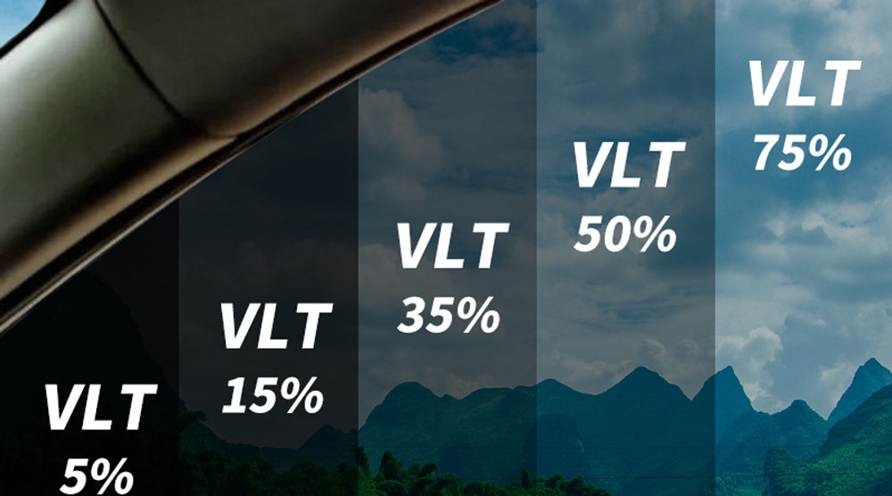
Visible light transmission changes how much light passes through the glass; the darkest-looking option is not automatically the best choice.
Do not confuse darkness with heat rejection
Visible light transmission, usually expressed as VLT, describes how much visible light passes through a window. A lower number looks darker. It does not by itself tell you the film’s total solar-energy rejection, infrared performance, colour stability or optical clarity. Two films with similar VLT can behave differently in Auckland sun. Ask for the specification sheet rather than choosing only from a shade sample held indoors.
Legal compliance also comes before appearance. The permitted tint level can differ by window position and vehicle type, and factory privacy glass already changes the starting measurement. An installer should measure the glass and explain the resulting VLT instead of assuming that the same film is suitable for every pane. A driver who travels at night or in heavy rain may also prefer a lighter, clearer film even when a darker option is technically available.
Installation quality shows at edges and demister lines
Good tint work is judged at the difficult areas: clean edges, consistent coverage, minimal contamination and careful work around rear-window demister lines. Existing scratches, chips, adhesive residue or damaged demister elements should be recorded before installation. Immediately after fitting, a little haze or moisture can be part of the curing process, but persistent bubbles, lifting edges or obvious debris are different issues. The workshop should explain the expected curing time and when the windows can safely be lowered.
Maintenance is straightforward but not optional. Avoid cleaning a newly tinted window before the film has cured. Later, use a soft microfibre cloth and a film-safe cleaner; aggressive blades, abrasive pads and unsuitable chemical cleaners can mark the surface or attack adhesive at the edge. This is the practical side of vehicle protection services that buyers should discuss before booking, not after a problem appears.
Ceramic coating protects prepared paint, but it is not armour
Ceramic coating is applied to exterior surfaces to create a water-repellent, easier-cleaning layer and enhance gloss. Protouch describes coating benefits that include resistance to UV exposure, water spots and environmental contaminants. The important word is resistance, not immunity. Coating does not make paint scratch-proof, and it does not absorb the impact of stones in the way a physical paint-protection film can.
Preparation determines whether the finish looks genuinely better
A coating follows the surface underneath it. If the clear coat has wash swirls, bonded contamination or polishing haze, sealing over it preserves rather than solves those defects. That is why a serious quote should separate decontamination and paint correction from the coating product itself. The condition of a new vehicle can differ from that of a three-year-old daily driver, so a fixed package without inspection may not represent the same amount of work.
Ask what is included before the coating is applied: pre-wash, iron and tar removal, clay treatment where necessary, machine polishing, panel wipe and controlled curing. Also ask how paint thickness and delicate edges are handled during correction. The bottle is only one part of the result; lighting, preparation and technician judgement usually explain much of the difference between two quotations.
Coated cars still need timely washing
A hydrophobic surface sheds water more readily, but dirt does not disappear by itself. Bird droppings, bug residue, road film and mineral-rich water can still mark a neglected finish. Use a pH-appropriate automotive shampoo, clean wash media and gentle drying towels. Automatic brush washes can introduce swirls even when a coating is present. If water behaviour becomes uneven, the cause may be contamination on top of the coating rather than immediate coating failure, so inspection and decontamination can be more useful than adding another layer.
Buyers should ask whether periodic inspection or maintenance washes are conditions of the warranty, what evidence must be retained, and whether accident repairs or panel repainting affect coverage. These questions expose the real ownership cost more clearly than a single “years of protection” number.
Where PPF and wrapping fit into the decision
Paint protection film, ceramic coating and vinyl wrapping also serve different purposes. PPF is the more relevant option for physical impact zones such as the bonnet edge, front bumper, mirrors and other areas exposed to road debris. Protouch describes its PPF as a clear, self-healing film intended to protect paint from chips, scratches and stains. Ceramic coating may be used alongside PPF to simplify cleaning, but it should not be sold as an equivalent barrier against stone impact.
Colour-change wrapping is primarily a visual transformation with a removable film layer, although it can also shield the original finish from some everyday exposure. It has its own edge care, wash restrictions and lifespan considerations. A buyer who wants a new colour, a buyer who wants easier washing and a buyer who wants chip protection are therefore asking for three different outcomes.
A practical way to choose
- Choose window tint when cabin heat, glare, UV exposure, privacy and interior preservation are the priorities.
- Choose ceramic coating when the paint is already in suitable condition and easier washing, gloss and contamination resistance matter most.
- Choose PPF for the panels most exposed to stone chips and physical abrasion.
- Choose vinyl wrapping when the main goal is a colour or styling change that does not permanently repaint the vehicle.
Many Auckland vehicles benefit from a deliberate combination rather than the largest package. Window film can improve cabin comfort, selected PPF panels can manage impact risk, and a properly prepared coating can make routine exterior care easier. The combination should reflect where the car is parked, annual mileage, motorway use, how it is washed and how long the owner plans to keep it.
Questions worth asking before the booking
Request the exact film or coating product, not just the brand family. Confirm the preparation steps, the areas included, cure time, first-wash date, aftercare products and written warranty exclusions. Ask the installer to note existing glass and paint defects, and make sure the quotation distinguishes optional correction work from the base service.
The strongest quotation is not necessarily the one with the darkest film, the most dramatic water-beading video or the longest headline warranty. It is the one that links a specific product and preparation process to the way the vehicle is actually used. When window tint and ceramic coating are compared by protection target and maintenance reality, the purchase becomes easier to evaluate and the finished work is less likely to disappoint.
