
Buying card-production equipment for the first time can be confusing because several terms are used to describe closely related machines. Badge printers, ID card printers and plastic-card printers often perform similar core tasks, but individual models can differ in print method, card capacity and optional functionality.
Understanding the basics before comparing a card printer machine can help a first-time buyer focus on useful features rather than unfamiliar technical terminology.
What Does a Card Printer Actually Do?
A dedicated card printer is designed to print onto compatible plastic cards rather than ordinary paper.
Organisations commonly use these cards for purposes such as:
-
Employee identification
-
Membership credentials
-
Visitor passes
-
Student cards
-
Event badges
-
Loyalty or customer cards
-
Contractor identification
The precise application determines the type of card design and production workflow required.
How Is It Different From an Office Printer?
Standard office printers are designed around sheets of paper. Card printers handle plastic cards individually and use printing processes designed for that format.
A printer for plastic cards can therefore produce consistent card-sized output without requiring printed paper to be attached to a separate badge.
This can be particularly useful for organisations that want cards to have a standard appearance and need to create replacements internally.
Understanding Single-Sided Printing
Single-sided models print the visible face of a card. They can suit straightforward identification layouts containing the cardholder’s photograph, name, organisation and identifier.
If all important information fits clearly on the front, single-sided output may be sufficient.
When Is Dual-Sided Useful?
Some organisations need additional space.
Information commonly placed on the reverse
The back can contain emergency contact details, conditions of use, instructions, membership information or other supporting content. Where this is a standard requirement, automatic dual-sided printing can reduce manual card handling.
What Are Badge Printers?
The term badge printer is often used for equipment that produces identification credentials, particularly in workplaces, events and organisations where cards are worn visibly.
Modern badge printers may be used to create personalised plastic credentials containing names, photographs and branded designs.
Badge printers can therefore overlap significantly with equipment described as ID card or plastic-card printers. Rather than focusing too heavily on product naming, buyers should compare actual functions.
How Much Printing Capacity Do You Need?
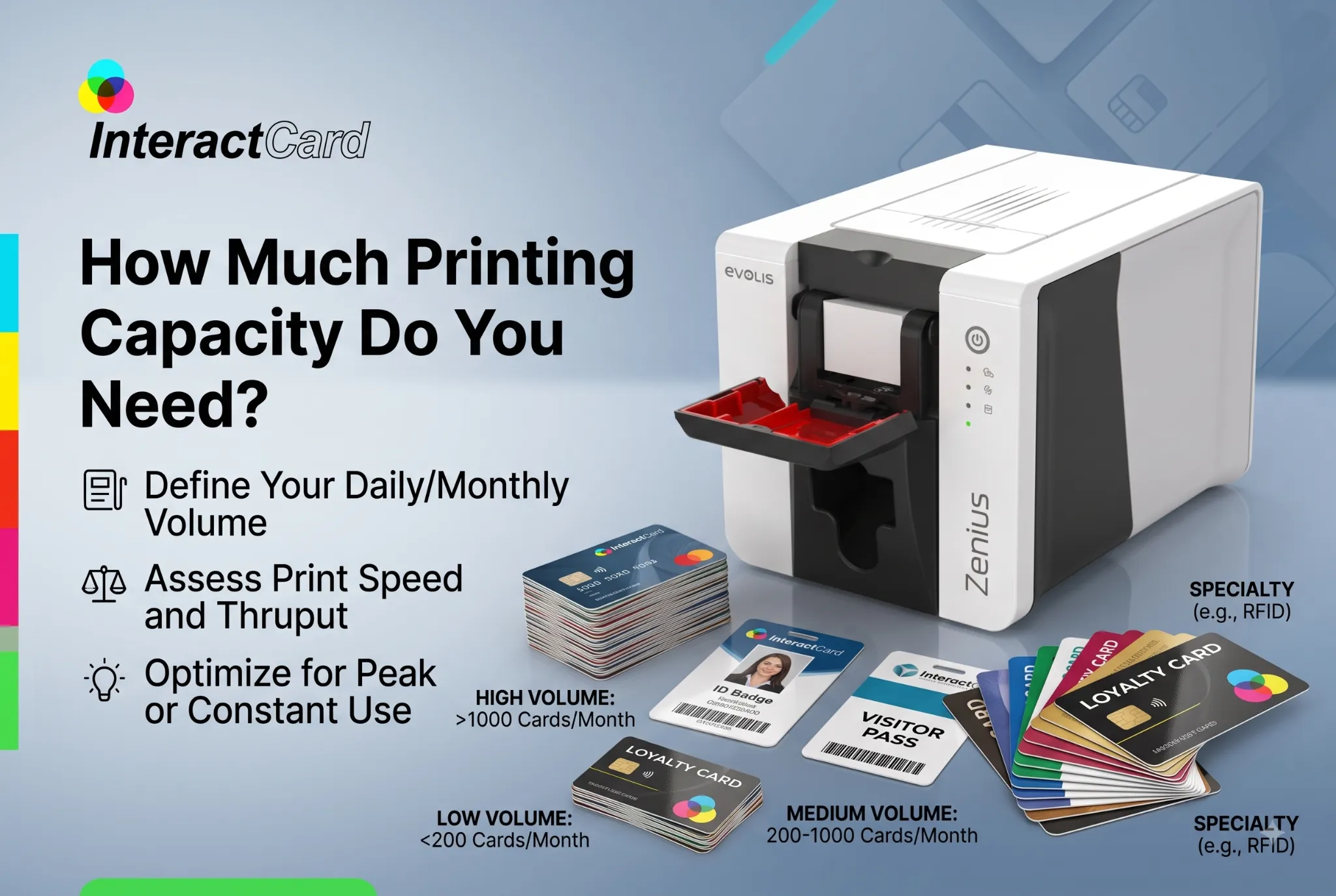
A small organisation issuing occasional employee cards may not need a machine intended for frequent batch production.
Estimate monthly volume and consider unusually busy periods. A school may have a major intake period, while a business could experience a spike during a recruitment programme.
Card printer machine selection should reflect both regular output and realistic peak demand.
What Consumables Are Required?
Plastic-card printing typically involves more than the printer itself.
Depending on the equipment, regular supplies may include:
-
Compatible blank cards
-
Printing ribbons
-
Cleaning materials
-
Replacement consumables
Understanding these items before purchase helps first-time buyers estimate ongoing operating requirements.
A printer for plastic cards should also be used with consumables appropriate to its specifications rather than assuming all plastic cards and ribbons are interchangeable.
Does Software Matter?
The printer hardware produces the physical card, but staff still need a way to create the design and populate cardholder information.
Think about how information will be entered. A simple workplace may manually create individual cards, while an organisation with a larger cardholder database may need a more structured workflow.
Build a Repeatable Process
Consistency improves both appearance and administration.
Use a standard card template
Creating an approved layout can reduce formatting differences between cards. Staff then update only variable details such as the name, photograph or identification number rather than redesigning every badge from scratch.
Consider Who Will Use the Printer
First-time buyers sometimes focus on specifications while overlooking staff usability.
If several people are responsible for producing cards, the workflow should be clear enough for each authorised user to follow. Basic internal instructions can cover card loading, design approval, printing and consumable replacement.
Badge printers can become much easier to manage when the organisation treats card production as a defined process rather than an occasional improvised task.
Why Choose Us
Interact Card offers card-printing solutions that organisations can compare according to their actual credential requirements. First-time buyers can start with card purpose, volume and layout instead of attempting to understand every possible printer feature immediately.
This practical approach can help narrow the options and identify equipment appropriate for routine card production.
About Us
Interact Card provides products related to identification and plastic-card printing for Australian organisations. The available solutions can support workplaces and other organisations looking to produce cards internally.
For a buyer considering a card printer machine for the first time, focusing on card format, printing frequency and ease of operation creates a clearer path to an appropriate decision.
Conclusion
Badge and plastic-card printers are easier to understand once the terminology is separated from the practical task. At their core, these machines allow organisations to personalise compatible cards with information and branding.
Determine what your cards need to contain, how frequently you will print them and who will operate the equipment. Those answers provide a far more useful buying framework than comparing specifications without context.
